Showing posts with label School. Show all posts

Monday, April 28, 2014

Pelaku Bunuh Diri Tiga Kali Terlibat Pencabulan di JIS

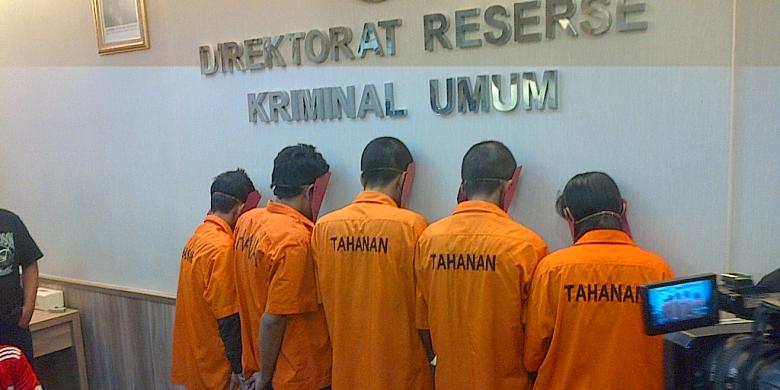
Lima Orang Tersangka Pelecehan Seksual Terhadap Siswa Jakarta International School

Jakarta, (News Today) - AZ, salah satu pelaku kekerasan seksual murid TK Jakarta International School (JIS) diketahui mencabuli murid di sekolah itu sebanyak tiga kali. 

Seperti yang telah diberitakan, AZ yang merupakan tersangka ke-enam kasus kekerasan seksual JIS, meninggal dunia di kamar mandi toilet Mapolda Metro Jaya. Pelaku diduga bunuh diri terkait kasus itu. 

Hal itu diungkapkan Kepala Bidang Humas Polda Metro Jaya, Komisaris Besar Rikwanto, kepada wartawan, di Mapolda Metro Jaya, Minggu (27/4/2014). 

AZ disebut melakukan perbuatan kekerasan seksual tersebut dalam waktu yang berbeda mulai Februari dan Maret 2014. "Pertama di bulan Februari, kedua dan ketiga dilakukan pada bulan Maret," ujar Rikwanto. 

AZ melakukan aksi bejatnya itu bersama tersangka ZA, AW dan SY di toilet Anggrek JIS. Kekerasan seksual itu dilakukan terhadap AK (6), murid TK yang menjadi korban. Perbuatan itu dimulai oleh SY, ZA, dan AW, yang disusul terakhir AZ. 

Kali kedua, kejadian terjadi pada 17 Maret 2014, AZ bersama tiga orang sebelumnya itu melakukan aksinya lagi. Namun, kepada petugas para pelaku mengaku tidak tahu siapa nama korban. 

Pada kekerasan yang dilakukan kali kedua itu, Rikwanto menyatakan para pelaku membagi tugas. Ada yang bertugas memegangi korban ada pula yang menjaga bagian depan pintu.

Sedangkan untuk ketiga kali, kejahatan seksual itu dilakukan lagi pada 20 Maret 2014, di toilet gymnastic sekolah JIS. Lokasinya berdekatan dengan sebuah kolam renang. Bersama teman-temannya AZ mencabuli seorang bocah yang hingga kini belum diketahui identitasnya.

Source : kompas

Sunday, April 27, 2014

Pekan Depan, Kepala Sekolah dan Tiga Guru TK JIS Diperiksa


Jakarta, (News Today) - Penyidik Polda Metro Metro Jaya memanggil Kepala Sekolah Jakarta International School (JIS), Timothy Carr, terkait kasus kejahatan seksual di sekolah berstandar internasional tersebut. 

"Akan diperiksa Kepala Sekolah JIS Timothy Carr," kata Kepala Bidang Humas Polda Metro Jaya, Komisaris Besar Rikwanto, di Mapolda Metro Jaya, Minggu (27/4/2014).

Selain memerika Timothy, penyidik Polda Metro juga akan memanggil tiga pengajar di taman kanak-kanak itu untuk diperiksa. Mereka rencananya akan dipanggil pada pekan depan. 

"Sekitar hari Rabu dan Kamis. Pemeriksaan tentang sistem (pendidikan) yang dibangun," ujar Rikwanto. 

Kasus kejahatan seksual ini juga membuat polisi telah memeriksa 28 orang pegawai JIS di rumah sakit Polri. Namun, pemeriksaan ke-28 pegawai JIS itu untuk mengetahui kemungkinan di antara mereka ada yang mengidap penyakit herpes, seperti yang terjangkit pada AK (6) korban kekerasan seksual tersebut.

Source : kompas

Saturday, May 8, 2010

Teen's daintier new nose carries bigger regret

(News Today) - Sabrina Weiss hated her nose.
"I felt it was a defect," she said. As a teenager, "It was a central obsession in my self-hatred. ... I felt like it was all anyone saw when they looked at me."

At 14, she asked her parents for surgery. A few years later, after she graduated from high school, Weiss got her wish -- rhinoplasty reduced the bump on her nose and pared down the tip.

Despite her new petite nose, Weiss began to regret her adolescent decision as she matured.

Having elective cosmetic surgery is life-changing. Experts say it's imperative that doctors assess both physical and mental maturity of teenage patients before agreeing to do the surgery.

"Whatever is done is permanent," said Dr. Richard Fleming, the facial plastic surgeon and co-director of the Beverly Hills Institute in California. "Nose job, breast work, they have to know it's permanent. They have to know if they decide not to do it at this time, they can get just as good result one year or 10 years from now."

"They have to know there's no rush in doing this."

The most common cosmetic surgery for teenagers is rhinoplasty- an operation to reshape the nose. The nose has usually completed 90 percent of its growth by the time girls reach the age of 14, and boys reach the age of 16, according to the American Society for Aesthetic Plastic Surgery.

Despite media reports that the popularity of teenage cosmetic surgery has soared in recent years, statistics from two plastic surgery societies show that is not the case.

The American Society for Aesthetic Plastic Surgery reported that the number of cosmetic surgeries for teenagers has remained fairly consistent for the last 12 years, hovering between 1 to 3 percent of total U.S. procedures.

Of the 203,308 procedures performed in 2009, 2 percent were under the age of 18. The American Society of Plastic Surgeons showed similar statistics.

For the small percentage of teenagers who decide to have surgery, the time after high school graduation seems to be ideal, Fleming said.

"It's a perfect opportunity to have it done before they get involved in a new circle of friends and colleagues, before going to college," he said.

"[Teenagers] have to be mature to undergo this and not do it because they saw their favorite celebrity getting a nose job or breast augmentation," Fleming said.

As a young high school student, Weiss hoped the surgery would be transformative and help her fit in.

"My fantasy was that I'd have this surgery and I would turn into the person that would easily be able to connect with others and have this social ease," she recalled. After the surgery, Weiss still felt painfully shy.

Elle.com: Read Weiss' first-person essay

Like adults, teenage patients need to have realistic expectations of how much cosmetic surgery can do, plastic surgeons said.

If a teenager says they want a procedure because of a failed relationship or the inability to get into the college of choice, that is a clear sign that the patient is still maturing and unable to handle the responsibilities of a major cosmetic surgery, Fleming said.

Dr. Laurie Casas, an associate professor of surgery at the Pritzker School of Medicine, University of Chicago, Plastic Surgery Division, said she looks for several factors when discussing cosmetic surgery with a young patient.

"During the interview process, I have to assess the level of maturity," she said. "What's involved with wanting that change? What's their expectation from the procedure? How do they want that body part to look?"

Sometimes, a teen patient will expect his or her parents to give all the answers. When the patient is asked what he or she dislikes about the nose, that person might respond, "I just don't like it," or "I just want you to fix the whole nose."

Those can be signs of emotional immaturity, said Casas, a plastic surgeon in Chicago, Illinois. About 10 percent of her teenage rhinoplasty patients are boys.

Casas said she won't operate on patients who are not emotionally mature, realistic and can understand the limitations of surgery.

"There might be BDD [Body Dysmorphic Disorder] or untreated psychological issues," she said. "Not that we can treat them, but we can say, 'I'm not the right person to do this surgery,' and in some cases I may recommend a psychological evaluation."

Weiss does not recall whether her surgeon asked her many questions before the surgery.

"Looking back, if anyone had questioned what my reasons for doing this, they would've seen it was irrational and a fantasy that having this surgery was going to somehow transform my entire life," she said.

When Weiss, 17 at the time, saw her new nose for the first time after surgery, she felt disappointed.

"To some degree, it helped," she said. "I felt less self-conscious that I had this massive bump in nose."

As she grew into her late 20s, Weiss began to regret her decision and felt she had the surgery for the wrong reasons.

"As a teenager, you're so myopic, you don't think about the long-term consequences of what you do," she said.

A better graduation gift for teenagers struggling with their body image would be to enroll them into programs or creative outlets like a painting class, Weiss suggested.

"It's on the shoulder of parents and guardians to ask a lot of questions of their teenagers to get to the root of why they're asking for this kind of surgery, to get them thinking about reasons below the surface for wanting this surgery.

"If you can, delay it for as long as you can."

The journey to self-acceptance takes persistence and patience, she said.

"Just stay the course. It can be painful, but it takes time. Eventually, you'll get there."

Source : CNN

Kids' TV time linked to school woes, bad habits

(News Terupdate) - Young children who watch a lot of TV aren't just missing out on more stimulating activities. They may also be destined for problems at school and unhealthier habits later in life, new research suggests.

Each additional hour of TV that toddlers watch per week translates into poorer classroom behavior, lower math scores, less physical activity, and more snacking at age 10, according to a new study in the Archives of Pediatrics and Adolescent Medicine.

"Kids should be doing things that are intellectually enriching: playing with board games, playing with dice, playing with things that will improve their motor skills, reading," says the lead author of the study, Linda Pagani, Ph.D., a professor in the School of Psychoeducation at the University of Montreal, in Quebec. "All that is replaced by sitting on the couch."

Pagani and her colleagues followed more than 1,300 children for over seven years. Using parent surveys, the researchers measured the amount of TV the kids watched at age two-and-a-half, and again at age four-and-a-half.

Then, when the children were in fourth grade, the researchers asked the kids' schoolteachers to rate their academic performance, how well they got along with peers, and how well they listened and followed instructions. They also asked parents about the child's diet and level of physical activity.

Health.com: 10 habits of healthy families

Each additional hour spent in front of the TV per week at age two-and-a-half corresponded to a 7 percent decrease in classroom engagement, a 6 percent decrease in overall math achievement, and a 10 percent increase in being bullied by peers. (Interestingly, TV time was not associated with reading skills.)

These findings suggest that kids who watch too much TV are "learning to be just a passive receptacle," Pagani says.

TV watching also appeared to have negative effects on physical health, with each additional weekly hour resulting in a 9 percent decline in overall physical activity, a 9 percent increase in soft-drink consumption, a 10 percent increase in snacks eaten, and a 5 percent increase in body mass index.

Health.com: 8 reasons to make time for family dinner

The American Academy of Pediatrics recommends that children under the age of 2 watch no television at all, and after age 2 watch no more than one to two hours of quality programming a day. But nearly half of 1- to 2-year-olds and more than 40 percent of 2- to 3-year-olds are estimated to watch more than the recommended amount, the study notes.

How does TV harm kids?

Pagani's study is merely the latest to call attention to the drawbacks of childhood TV-watching. A number of studies have linked too much TV to a range of negative effects in kids, including shorter attention spans, slower language acquisition, increased aggression, and weight gain.

Experts have suggested several possible explanations for these findings. One theory is that time spent in front of the tube is time that could be spent on more enriching activities. As Dr. Jeffrey Brosco, M.D., a professor of clinical pediatrics at the University of Miami Miller School of Medicine, puts it, "Every hour that you're watching TV, you're not talking to someone, not playing a game, not building something with your blocks."

Health.com: Too much TV linked to earlier death

Another theory is that the act of watching television can harm developing brains. A child's brain triples in size within the first three years of life in response to external stimulation, says Dr. Dimitri Christakis, M.D., a professor of pediatrics at the University of Washington and the country's foremost expert on the health effects of TV in childhood.

"Early exposure to [television] can actually be over-stimulating for the developing brain, and that can lead to shorter attention spans [and] cognitive difficulties," says Christakis, the author of "The Elephant in the Living Room: Make Television Work for Your Kids."

The rapid edits and quick sequences found in many of today's TV shows may be especially harmful in this respect, Christakis adds. "The hypothesis we have is that this conditions the mind to expect high levels of input, and by comparison, reality is boring -- it doesn't happen fast enough," he says.

Yet another possibility is that the negative effects of TV that have been reported in studies are in fact a symptom of broader family and household dynamics. In the new study, for instance, the children whose mothers were less educated and children from single-parent families tended to watch more television. Although Pagani and her colleagues controlled for these and other factors in their analysis, household habits can shape studies like this in ways that can be difficult to tease out.

Health.com: Make play areas greener and safer for kids

"It's always possible that what you're measuring is not TV itself, but families that are more likely to let their kids watch TV versus families that don't want them to watch TV, or maternal education," says Brosco. "No one really understands what the effects of TV truly are, but so many studies--like this [one]--suggest TV is just plain bad for you."

Some TV shows are better than others

Watching television isn't necessarily harmful, however, and it doesn't have to be a mindless activity, says Christakis. He points out that Pagani and her colleagues did not ask about the specific programming that kids watched, which may weaken the findings.

"The results of this study probably in some ways misrepresent the reality," Christakis says. "Studies that we've done find that what kids watch--and how they watch--is as important as how much they watch."

Health.com: Is it baby fat or obesity?

Christakis believes that children should watch no more than an hour of television a day at any age. But, he says, parents should distinguish between mind-numbing cartoons and educational programs such as Sesame Street. "Parents need to know that the best-quality shows have a curriculum," he says. "They're trying to teach your child something, anything from the letter k to skills like how to share or how to handle a conflict."

According to Christakis, the best way for young children to watch TV is with a parent. This allows parents to use potentially negative content (such as violence or advertising) as a learning experience, and also provides an opportunity to engage with the children and reinforce the message of educational shows.

Source : CNN

Saturday, May 1, 2010

Jesse James spotted without ring

(News Terupdate) - After a month at a treatment facility to deal with "personal issues," Jesse James was spotted back at his Los Angeles area home Monday. He was not wearing a wedding ring as he took his children to school.

James, 40, checked into the treatment center last month after his marriage to Oscar-winner Sandra Bullock went into a crisis amid reports that he had multiple affairs.

Bullock, 45, had remained out of sight until earlier this month when she was photographed hiking in Northern California, also not wearing her wedding ring.

Source : CNN

Share

Twitter Facebook